Recurring invoices for retainers and subscriptions
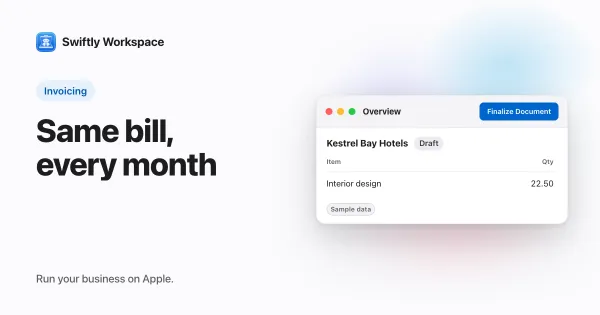
A recurring invoice is a template plus a schedule: on each billing date, the same customer, lines and terms produce a new invoice. The safest setups create a draft that someone reviews before it goes out, so a change in price, scope or tax is caught in time.
Recurring invoices suit any work that repeats on a calendar: a monthly retainer, a yearly support plan, a project paid in equal parts. Set up well, they save an evening of copying last month's invoice. Set up badly, they send the wrong amount to a good customer every month until someone notices.
Which kind of recurring billing do you need?
| Model | What repeats | Usual timing | Watch out for |
|---|---|---|---|
| Retainer | A fixed fee for reserved time or a set level of service | Monthly, in advance | Unused hours and overage: agree in writing what happens to both |
| Subscription | A fixed fee for access to a service for a period | Monthly or yearly, in advance | Plan changes mid-period, which need proration |
| Payment plan | Equal parts of an agreed total | Monthly until paid | Stopping after the last part |
| Usage in arrears | Hours or units actually used | After each period | It needs the period's figures before the invoice can be built |
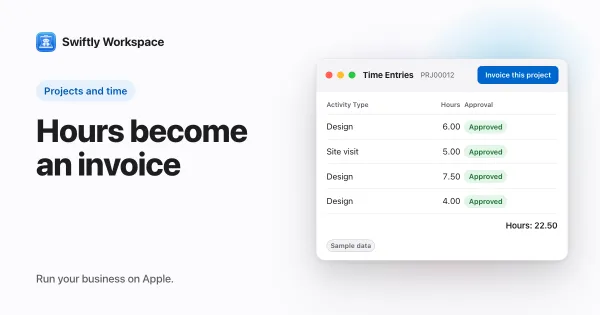
The last row is less a template than a habit. If you bill hours as they are worked, our guide to invoicing a project now or on a set frequency fits better than a fixed schedule.
What a recurring schedule holds
- The customer and the billing contact the invoice goes to.
- The lines: item, description, quantity, price and tax rate, exactly as they should appear each time.
- The frequency: weekly, monthly, quarterly or yearly.
- The start date and the next date an invoice is due to be created.
- An end: an end date or a number of invoices, so a finished payment plan stops.
- The payment terms printed on each invoice.
- What happens on the day: hold the new invoice as a draft for review, or send it without review.
Advance or arrears
Billing in advance means the invoice for March goes out at the start of March. It is the norm for retainers and subscriptions and it keeps cash flow ahead of the work. Billing in arrears means you invoice at the end of the period for what was used. It is fairer for variable work, but you carry the cost of the month before you are paid.
Whichever you choose, name the period on the invoice line, for example "Retainer, March". A customer reading the invoice six months later should know what it paid for.
Review before sending, or send without review?
Sending recurring invoices without anyone looking is tempting. It is also how a price rise that was agreed never reaches the invoice, or how a canceled customer keeps receiving bills. A short review catches:
- a price change that was agreed but not copied into the template;
- a tax rate that changed since the schedule was set up;
- a new billing address or a new contact at the customer;
- a customer who canceled or paused;
- extra work in the period that belongs on the same invoice.
For most small businesses, a draft that waits for one click is the right balance: the schedule does the typing, and a person stays responsible for what is sent.
Proration, worked through
Proration charges part of a period when a customer starts, stops or changes plan partway through. The usual method is the share of days used.
Say a customer starts a monthly retainer on the 16th of a 30-day month (sample data). They use the 16th through the 30th, which is 15 of 30 days, so the opening invoice carries half the monthly fee. From the next month on, the schedule bills the full fee in advance.
Write your proration rule into the agreement, so the opening invoice holds no surprises.
Keeping schedules tidy
- One schedule per agreement. Two retainers with one customer are two schedules, each with its own end.
- Review every schedule each quarter. Check the price, the lines and whether the agreement is still running.
- Tell customers before a price change and update the template on the day it takes effect.
- Keep payment terms short and clear. Repeating invoices are easy to pay and easy to forget; our habits for getting paid faster apply twice over.
Costs repeat too. Recurring supplier bills follow the same template-and-schedule pattern from the other side; see scheduling the supplier costs that repeat every month. For one-off work priced up front, a clean quote-to-invoice flow is the better fit.
Frequently asked questions
What is a recurring invoice?
An invoice created on a schedule from a saved template. The customer, lines and terms stay the same, and a new invoice with its own number and date appears each period.
How do I invoice a retainer client?
Agree the fee, the period, and what happens to unused or extra hours. Then set up a monthly schedule that bills in advance, name the month on the invoice line, and invoice any agreed overage separately or on the next invoice.
Should recurring invoices go out without review?
They can, but a quick review of each draft catches price changes, cancellations and wrong contacts before the customer does. For most small businesses the minute it takes is worth it.
What is the difference between recurring billing and a subscription?
A subscription is the agreement: access to a service for a fee each period. Recurring billing is the mechanism that invoices it. Retainers and payment plans use recurring billing too.
How do I change the price on a recurring invoice?
Give the customer notice, then update the template so the next invoice uses the new price. Leave invoices already sent as they are; if one was wrong, correct it with a credit note.
Run your business on Apple.
Questions about running your business on Mac, iPad and iPhone? Our team answers every message.
Contact support