Getting paid faster: habits for small service businesses
To get paid faster, invoice the day the work is done, state the due date and how to pay, make paying a matter of seconds, follow up on a fixed schedule, and match each payment to its invoice so you always know who still owes you.
None of this needs a collections department. For a small service business, many late payments come from friction rather than bad intent: an invoice that arrived late, a missing reference, a bank detail someone had to look up, a reminder nobody sent. Remove the friction and the average wait shrinks.
Seven habits at a glance
| Habit | Why it speeds payment |
|---|---|
| Invoice promptly | The payment clock starts when the invoice arrives, not when the work ends |
| Agree terms up front | A due date the customer accepted is a due date they plan for |
| Send complete invoices | An invoice that has to be corrected starts the clock again |
| Make paying easy | Fewer details to copy means fewer reasons to put it off |
| Ask for a deposit | Part of the money arrives before the work starts |
| Follow up on a schedule | A polite, predictable reminder works better than an angry late one |
| Record payments as they arrive | You chase the right people, not someone who already paid |
1. Invoice the day the work is done
Every day between finishing a job and sending the invoice is a day added to the wait. Make invoicing part of closing a job: the last task on the list, done before you move on. Batching invoices at the end of the month feels efficient, but for a job finished on the third it adds weeks.
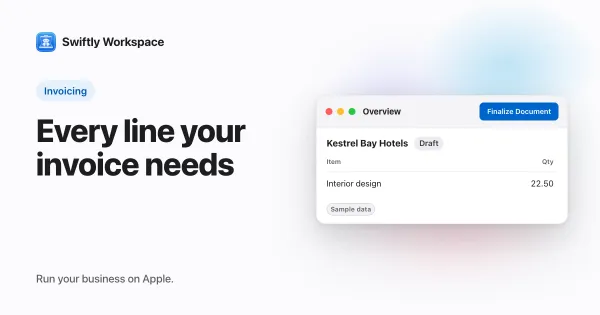
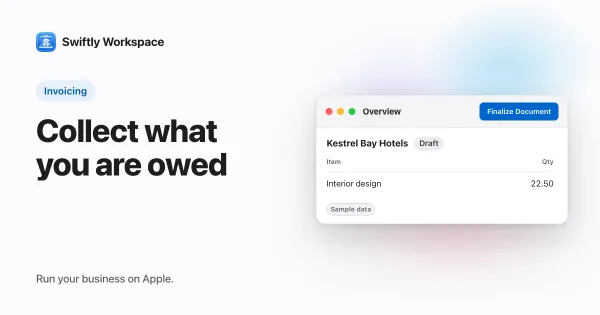
In Swiftly Workspace an invoice starts as a draft and goes out once a person finalizes it, so keep drafts short-lived: check, finalize and send the same day.
2. Agree on payment terms before you start
Put the payment terms in your quote or engagement letter and repeat them on every invoice as a due date, not just "30 days". A concrete date is easier to plan for and harder to forget. Shorter terms help, but terms the customer actually agreed to help more.
Know the rules where you work. EU law sets an outer limit: under the Late Payment Directive, payment terms between businesses are generally capped at 60 days unless both sides expressly agree otherwise and the agreement is not grossly unfair, and public authorities generally have 30 days. National laws build on this, so check your own country's rules.
3. Send invoices that need no follow-up questions
An invoice that bounces back for a missing reference, a wrong legal name or an unclear description restarts the clock. Larger customers often need their own reference on the invoice before anyone can approve it, so ask for it at the start of the job. The invoice checklist covers what an EU invoice must contain.
4. Make paying take seconds
Print your IBAN and a payment reference on every invoice, and make them easy to copy. Better still, let the customer scan instead of type. On finalized euro invoices with an amount due and your IBAN on them, Swiftly prints a SEPA QR code: the customer scans it with their banking app, which fills in your name, IBAN, the amount and the reference. How scan-to-pay QR codes work explains the details.
For customers you bill every month, a direct debit mandate removes the step altogether; how SEPA direct debit works covers the mandate and the rules around it.
5. Ask for a deposit on larger jobs
For a project that runs for weeks, asking for part of the fee up front protects your cash flow and filters out customers who were never going to pay on time. A proforma is the usual way to request it; proforma vs invoice explains when to use one and how it turns into the final invoice.
6. Follow up on a fixed schedule
Decide your reminder rhythm once and stick to it: a friendly heads-up shortly before the due date, a reminder on the day after, and a firmer one a week or two later. Predictable follow-up feels professional, not pushy, and customers learn that your due dates are real.
Keep a record of every reminder. In Swiftly, each invoice has a Reminders list, and Send Reminder adds an entry with its level and channel, so anyone on your team can see who was chased, when and how before they pick up the phone. For wording that stays polite at each step, see how to word a payment reminder, and how a reminder schedule escalates covers late interest and when to stop.
7. Record payments the day they arrive
Your list of open invoices is your chasing list, so it has to be right. Record each payment when it lands and allocate it to the invoice it pays; a partial payment leaves the rest open until the next one. Swiftly's Auto-Match suggests the matching invoice from the payment's reference or amount, and you confirm it. Allocating payments to invoices walks through it.
Once the records are current, a quick question tells you where you stand. In Main Chat (Conversations in the app), ask "Which invoices are overdue?" and the assistant answers from your own invoices and payments, using an AI provider your company connected with its own key or Apple Intelligence on your device. Asking your workspace about your data shows what else it can answer.
A weekly ten-minute routine
- Finalize and send every invoice for work finished this week.
- Record the payments that came in and allocate them.
- Look at what is overdue and send the next reminder for each one.
- Call the one or two customers whose reminders went unanswered.
Frequently asked questions
What payment terms should a small business use?
Many small service businesses use 14 or 30 days. Shorter terms shorten the wait, but the deciding factor is that the customer agrees to them before the work starts. Within the EU, terms between businesses beyond 60 days generally need an express agreement.
Do early payment discounts work?
They can, for customers who pay late because paying is low on their list. A small discount for payment within a few days moves you up that list. Price it carefully: on thin margins, a discount can cost more than the wait.
What is the fastest way for a customer to pay an invoice?
In many euro-area countries, scanning a SEPA QR code with a banking app is among the quickest, because the customer types nothing. For regular customers, a direct debit mandate is quicker still, since the payment needs no action from them at all.
Should I invoice weekly or monthly?
Invoice when a piece of work is done or a billing period closes. For ongoing work, weekly or every two weeks keeps amounts small and easy to approve; a large monthly total is more likely to wait for someone's sign-off.
Run your business on Apple.
Create your account on the web, then set up your workspace in the app on your iPhone, iPad or Mac.
Create your account